
Hiring Line Cooks: Stop Searching for the Perfect Fit
by Sheldon | Oct 16, 2026
Hiring Line Cooks gets harder when every preference becomes a requirement. Transferable skills matter more than finding perfection.


Hiring Tips
by Sheldon | Oct 12, 2026 | 3 min read
Restaurant hiring expectations exist on both sides of the interview, and understanding them early helps employers and job seekers determine whether the position is the right fit. Don’t wait until you receive an offer to discuss something that could determine whether you accept the job.
Start by identifying your non-negotiables. Compensation, schedule, hours, benefits, commute, time off, and responsibilities can determine whether a position works for you.
If you can’t work Sundays, a position requiring Sunday availability isn’t the right fit. If you need a predictable schedule because of childcare, school, or another job, ask how far in advance the restaurant posts schedules and whether they change frequently.
Other considerations may be preferences rather than requirements. You might prefer a shorter commute, two consecutive days off, a particular restaurant environment, or more creative responsibility.
Knowing what you need versus what you prefer helps you ask specific questions and recognize when an opportunity isn’t the right fit.
Employers and job seekers can discuss the same position and leave with different understandings of what each side expects.
Terms like “flexible schedule,” “hands-on manager,” “competitive compensation,” “growth opportunity,” and “some weekends” can mean different things to each person.
A few specific questions can clarify the position:
Employers benefit from defining these details before advertising the position. Our Restaurant Job Post Checklist covers the compensation, schedule, requirements, location, team structure, and hiring process worth establishing before candidates begin applying.
The more important an expectation is, the less room there should be for interpretation.
Neither side benefits from avoiding an important conversation just because the answer might prevent the hire. It only delays the problem.
Interviews should uncover potential mismatches, not just confirm qualifications and interest.
Ask what the previous person in the position found challenging. Discuss responsibilities that may be difficult to manage, scheduling limitations, and any expectations neither side has addressed.
Employers should explain the realities of the position, including requirements that may discourage some candidates. Job seekers should also communicate any limitations or expectations that could affect their decision to accept the job.
An interview isn’t just about getting an offer or finding someone to hire. It’s an opportunity for both sides to determine whether they can work together under the conditions being discussed.
Once both sides agree to move forward, the employer should provide a written offer confirming the terms discussed during the hiring process.
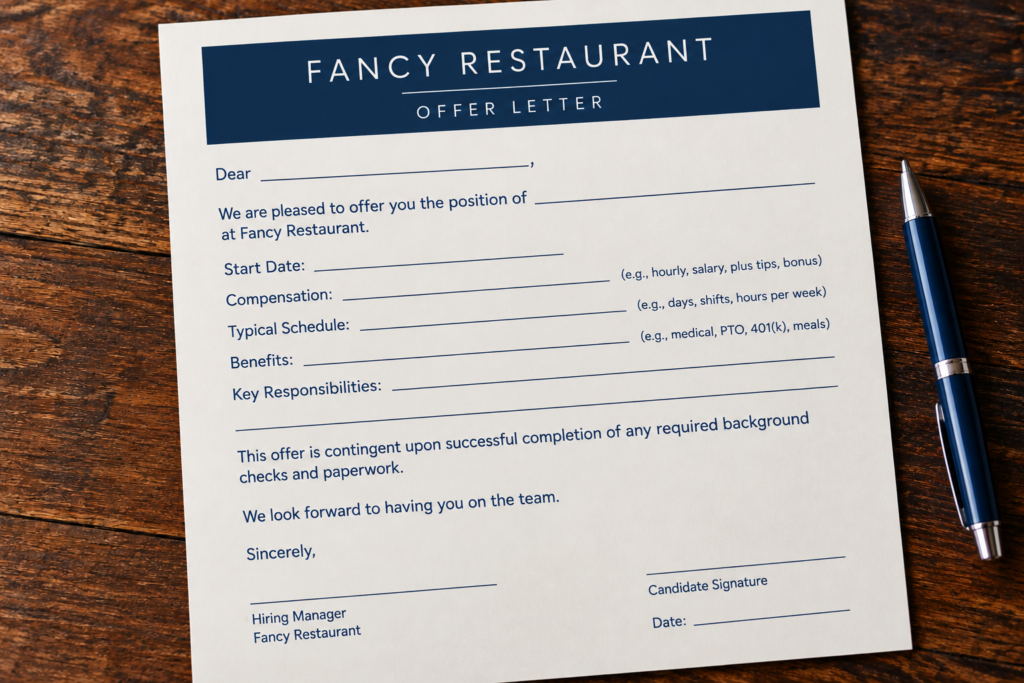
At minimum, the offer letter should clearly state the position, compensation, start date, and other important employment terms. Depending on the role, it may also include expected hours or schedule, benefits, paid time off, reporting structure, and other material details discussed during interviews.
The U.S. Department of Labor’s guidance on evaluating job offers also encourages job seekers to evaluate the full offer, including compensation, benefits, hours, flexibility, and vacation time, rather than salary alone.
An offer letter doesn’t need to document every operational expectation. It should confirm the important terms both sides relied on when deciding to move forward.
An offer letter shouldn’t be the first time a candidate learns an important detail about the job.
Clear expectations don’t guarantee a successful hire. But before the employee’s first day, both sides should review and agree on the same employment terms.
Written by Sheldon
by Sheldon | Oct 16, 2026
Hiring Line Cooks gets harder when every preference becomes a requirement. Transferable skills matter more than finding perfection.

by Sheldon | Sep 29, 2026
Hospitality employee dedication can be difficult to identify during hiring. Learn what dedication looks like and why recognizing it matters.

by Sheldon | Sep 22, 2026
When is an employee ready for restaurant management? Learn what to look for before promoting a strong restaurant employee into management.
Mis en Place helps independent restaurants and hospitality businesses build stronger teams through recruiting and hiring tools created specifically for the industry.